
WHY THE STUDIO STILL MATTERS IN A DIGITAL FIRST WORLD
In a world where content can be created, edited and delivered from almost anywhere, it’s easy to assume the physical studio is becoming less relevant.
Cloud-based workflows, remote collaboration and AI-powered tools have transformed how creative production happens. Ideas are developed over video calls, edits are reviewed online, and teams can work seamlessly across locations.
But while production has become more digital, the moment of capture still demands something physical.
In reality, the role of the studio hasn’t diminished. It’s evolved. And for brands investing in high-quality, high-impact content, it remains more important than ever.
CONTROL CREATES CONSISTENCY
One of the biggest advantages of working in a studio environment is control.
Unlike location shoots, where weather, lighting and external factors introduce unpredictability, a studio allows every element to be carefully managed. Lighting can be shaped precisely. Sound can be isolated. Sets can be built and refined without disruption.
For brands producing campaign assets across multiple formats (from hero films to social cutdowns) this level of control is critical. It ensures consistency across every output, helping maintain visual identity and brand standards.
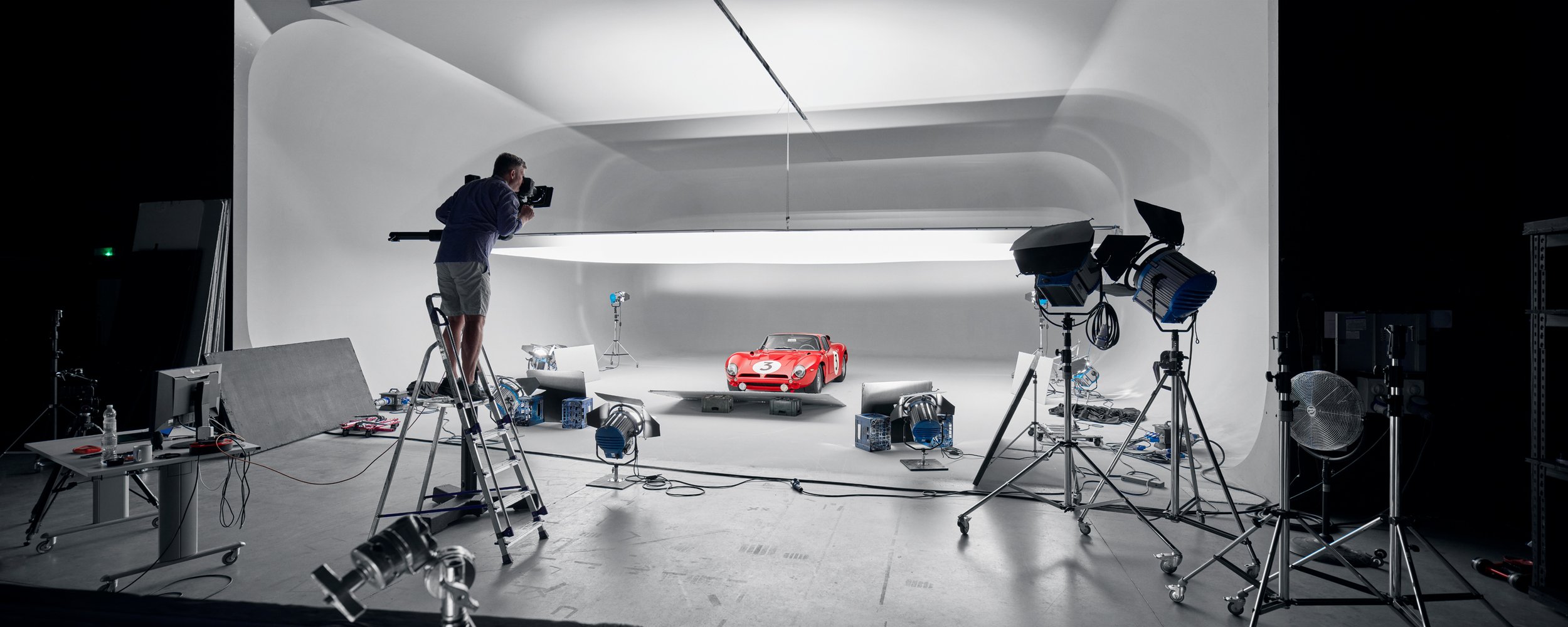
In studio environments like J11 Studios and The Fold, this control allows production teams to recreate setups, refine details and deliver repeatable results across multiple shoot days. Something that’s difficult to achieve on location.
CREATIVE FLEXIBILITY IN ONE PLACE
Studios give creative teams the ability to build exactly what a project requires.
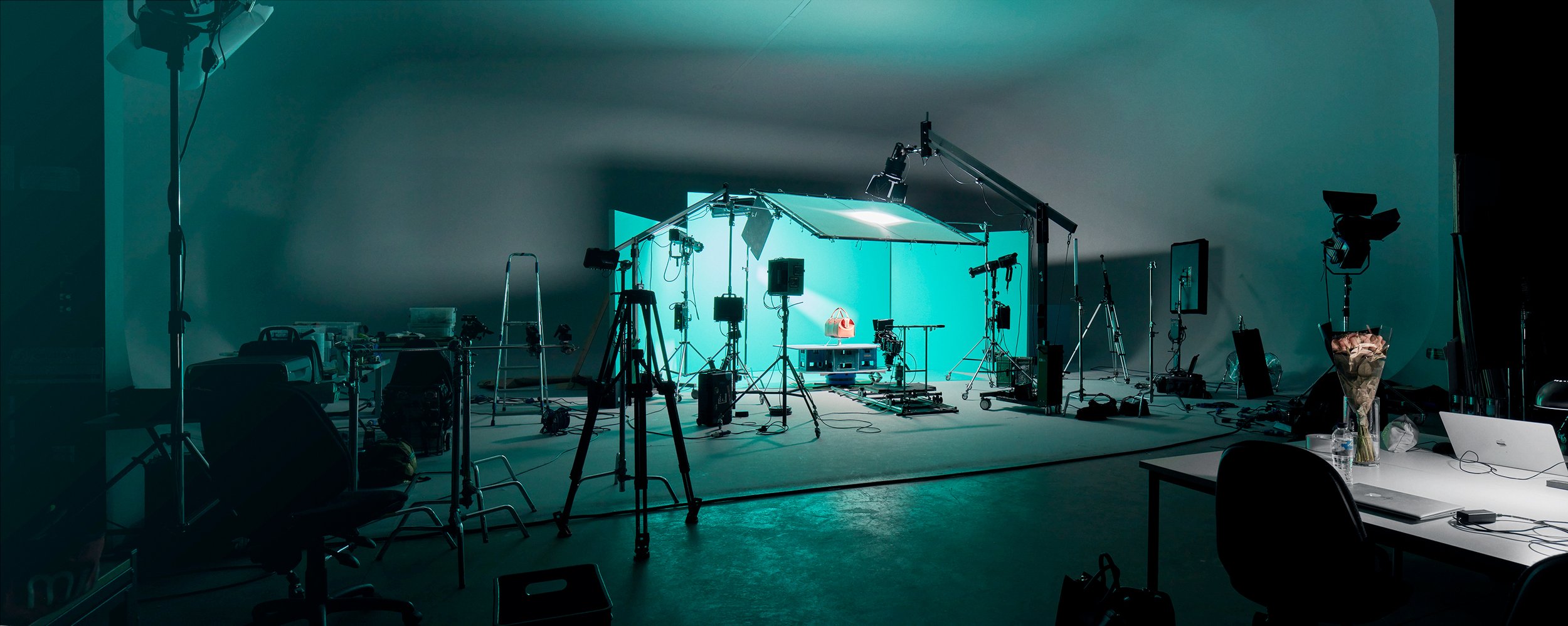
From product shoots and interviews to large-scale set builds and green-screen environments, studios enable productions to create worlds that would be difficult, expensive or impossible to achieve elsewhere.
Sets can be constructed, adapted and rebuilt within the same space. Lighting rigs can be adjusted quickly. Cameras can move freely without real-world constraints.
This flexibility is particularly valuable for brands producing high volumes of content. Rather than splitting production across multiple locations, studios allow teams to capture a wide range of assets (film, photography and social content) within a single, adaptable environment.
At facilities like J11 Studios and The Fold, this means productions can move seamlessly between setups, maximising both creative output and time on set.
EFFICIENCY ACROSS THE PRODUCTION PROCESS
As content demand increases, efficiency has become just as important as creativity.
91% of businesses now use video as a marketing tool, and the volume of content required across platforms continues to grow.
Location shoots often involve complex logistics (travel, permits, weather contingencies and scheduling challenges) all of which can impact timelines and budgets.
Studios remove much of this complexity.
With production-ready environments, on-site facilities and adaptable spaces, teams can move quickly between setups without the need to relocate. Equipment is already in place. Crews are working in familiar surroundings.
For brands and agencies working to tight deadlines or delivering multi-channel campaigns, this ability to centralise production can significantly improve both speed and cost-efficiency.

SPECIALIST EQUIPMENT AND EXPERTISE
Studios are more than just spaces. They are built around the tools and people that make high-quality production possible.
Integrated lighting rigs, camera systems, grip equipment and sound facilities allow productions to achieve professional results efficiently.
Just as importantly, studio environments bring together experienced crews who understand how to get the most out of that setup. Directors, cinematographers, lighting technicians and production teams collaborate in real time, solving problems and refining creative on the spot.
While remote workflows are invaluable for planning and post-production, the energy and immediacy of a live studio shoot remain difficult to replicate.
This combination of environment, equipment and expertise is what enables studios like J11 Studios and The Fold to support everything from straightforward shoots to more complex, high-end productions.
THE STUDIO AS A MODERN CREATIVE HUB
The role of the studio has expanded beyond simply being a place to shoot.
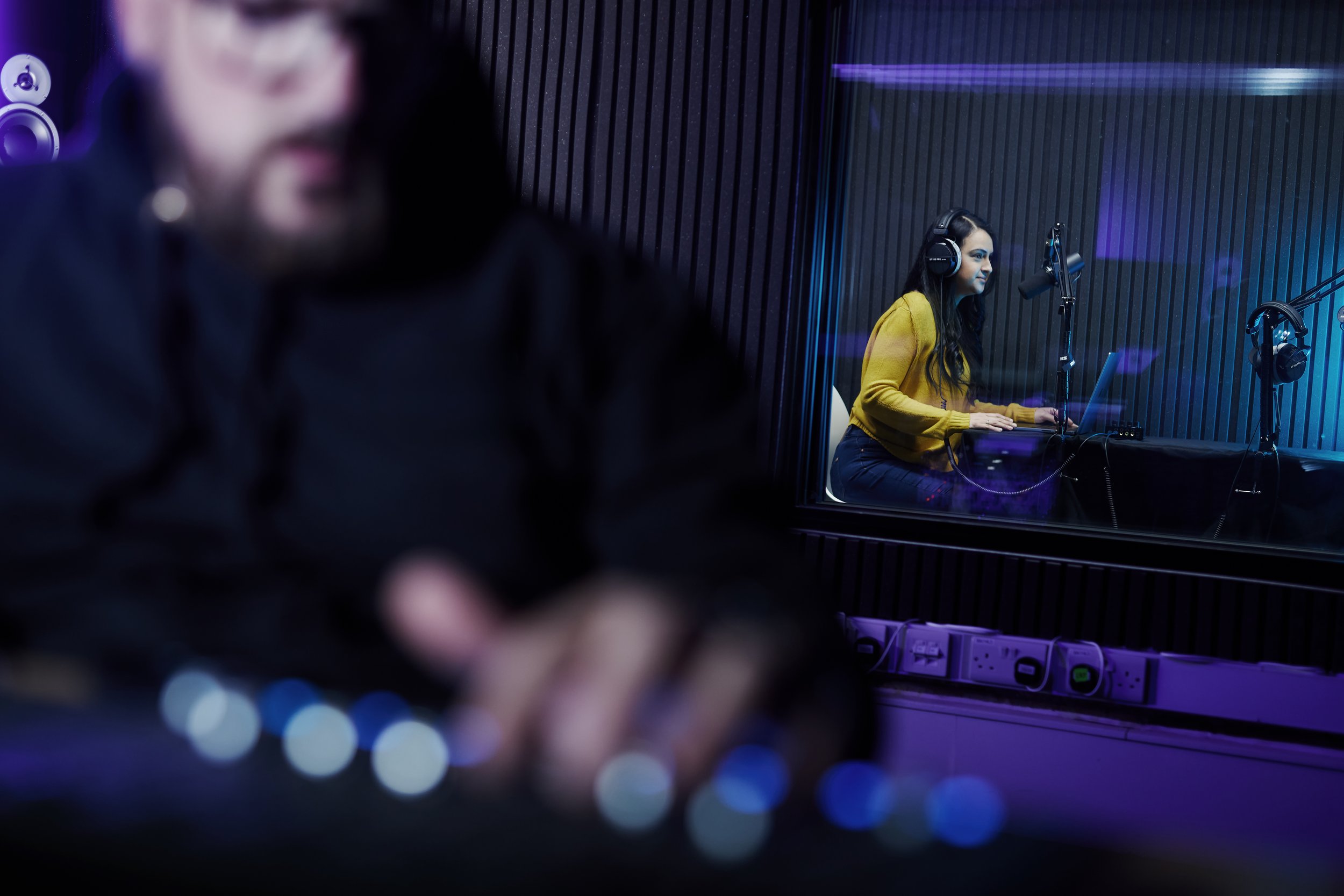
Today, studios increasingly act as end-to-end creative hubs, bringing together multiple stages of production in one environment.
Concept development, filming, photography and post-production can all happen in close proximity, allowing teams to collaborate more effectively and make faster creative decisions.
Clients can review footage in real time. Directors can adjust shots instantly. Editors can begin shaping content almost immediately after capture.
This integrated approach reflects how modern production works - combining speed, collaboration and flexibility in a single space.
Studios like The Fold in particular are designed with this in mind, supporting not just production, but the wider creative process around it.
SUPPORTING MODERN PRODUCTION TECHNLOGIES
The rise of digital production tools hasn’t replaced the studio; it has expanded what studios can offer.
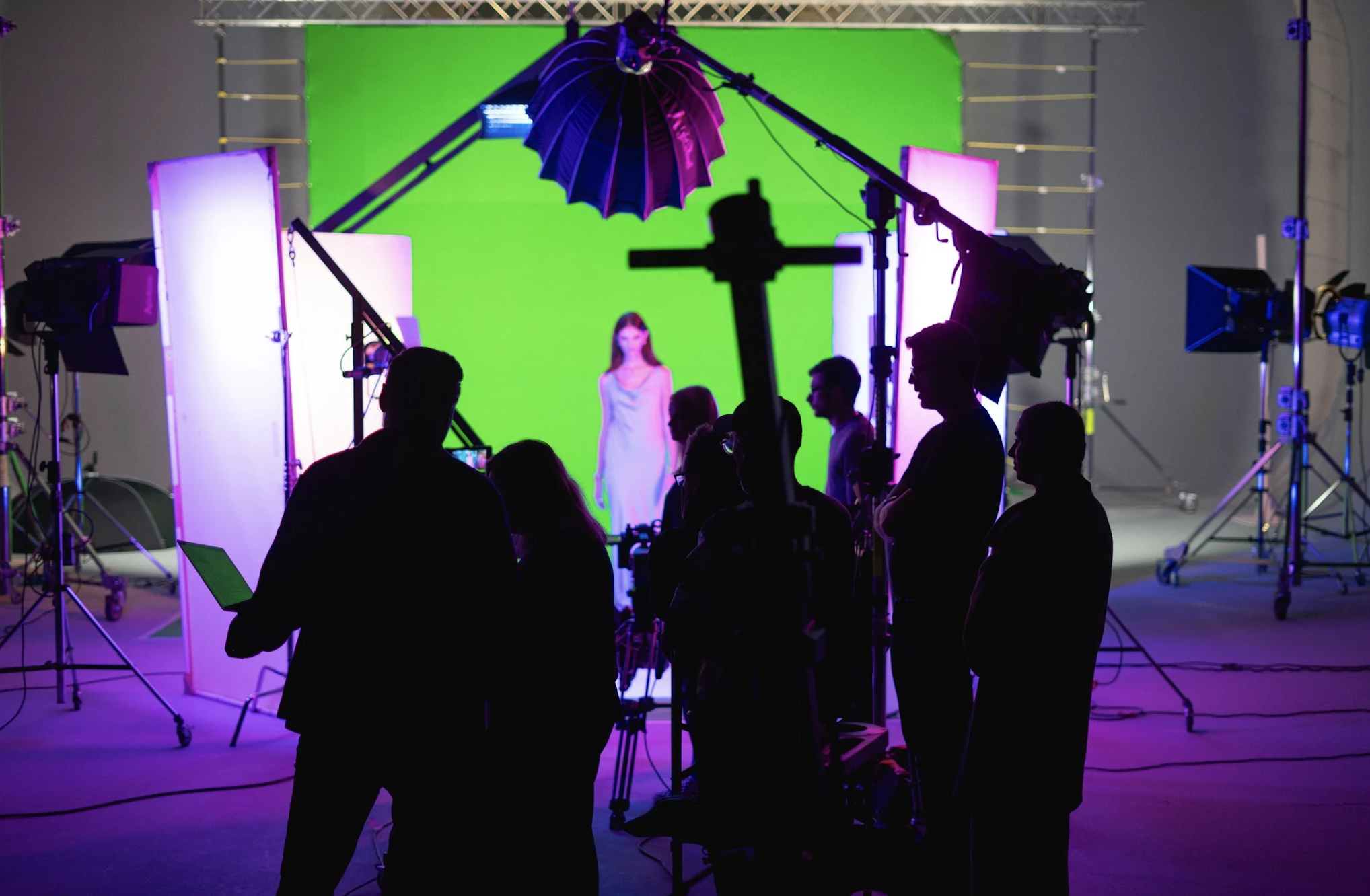
Technologies such as virtual production, real-time rendering and advanced compositing all rely on controlled studio environments. Even more accessible setups, such as green screens and real-time backgrounds, depend on consistent lighting and space.
Studios now act as the bridge between physical and digital production - combining the control of a physical environment with the flexibility of digital creativity.
At both J11 Studios and The Fold, this means spaces that are not just fit for traditional filming, but adaptable to evolving production workflows.
GENERATIVE AI AND THE RISE OF HYBRID PRODUCTION
Generative AI is rapidly reshaping how content is created.
From AI-assisted editing and automated asset generation to synthetic imagery and video, these tools are enabling teams to produce content faster and at greater scale than ever before.
For brands, this creates a clear opportunity. Production is becoming more efficient, more iterative and more accessible.
But it also introduces a new challenge: differentiation.
As AI-generated content becomes more widespread, the value of high-quality, distinctive and brand-led production increases.
This is where studios play a critical role.
Rather than replacing physical production, generative AI is increasingly being used alongside it. Studio-shot footage can be enhanced with AI-driven environments and visual effects. Pre-visualisation tools allow creative teams to plan shoots more effectively. Post-production workflows can be accelerated through AI-assisted editing and compositing.
This hybrid approach (combining physical production, digital workflows and AI augmentation) is quickly becoming a defining feature of modern content creation.
In studio environments like J11 Studios and The Fold, this means capturing high-quality, controllable footage that can then be extended, adapted and scaled using AI tools.
The result is not a replacement for traditional production, but an expansion of what’s possible - blending efficiency with creative control.
CREATING STANDOUT CONTENT IN A CROWDED LANDSCAPE
Perhaps the most important reason studios still matter is quality.
Today’s content landscape is more competitive than ever. Brands are producing more content across more platforms, all while competing for limited audience attention.
To stand out, content needs to feel considered, polished and visually distinctive.
Studios provide the environment where that level of quality can be consistently achieved. Every detail, from lighting and composition to sound and set design, can be controlled and refined.
For brands investing in high-impact campaigns, that level of craft can be the difference between content that blends in and content that delivers real engagement.
THE FUTURE OF THE STUDIO
As production continues to evolve, the studio is becoming more specialised, not less relevant.
Hybrid workflows combining studio production, digital collaboration and AI-assisted tools are quickly becoming the norm. Creative teams may develop ideas remotely, share assets through cloud platforms and review edits online, but the moment of capture still relies on physical space.
The studio has become the point where technology, expertise and creative collaboration come together.
For facilities like J11 Studios and The Fold, this means continuing to evolve - creating spaces that support modern production while maintaining the control and quality that studios have always provided.
In a digital-first world, the question isn’t whether the studio still matters. It’s how it’s being used differently.
And for brands looking to create high-quality, scalable and standout content, the answer is clear...the studio remains at the centre of it all.